DAVID BOWIE: I started going round and round, faster and faster. And then I let go. And as I let go I ran out of petrol.

I wrote that in Berlin, in the mid to late Seventies. It was about one of the few very stupidly, badly attempted thank God, suicide attempts that I tried. The full story is rather alarming. I’m not sure if I should tell it or not.

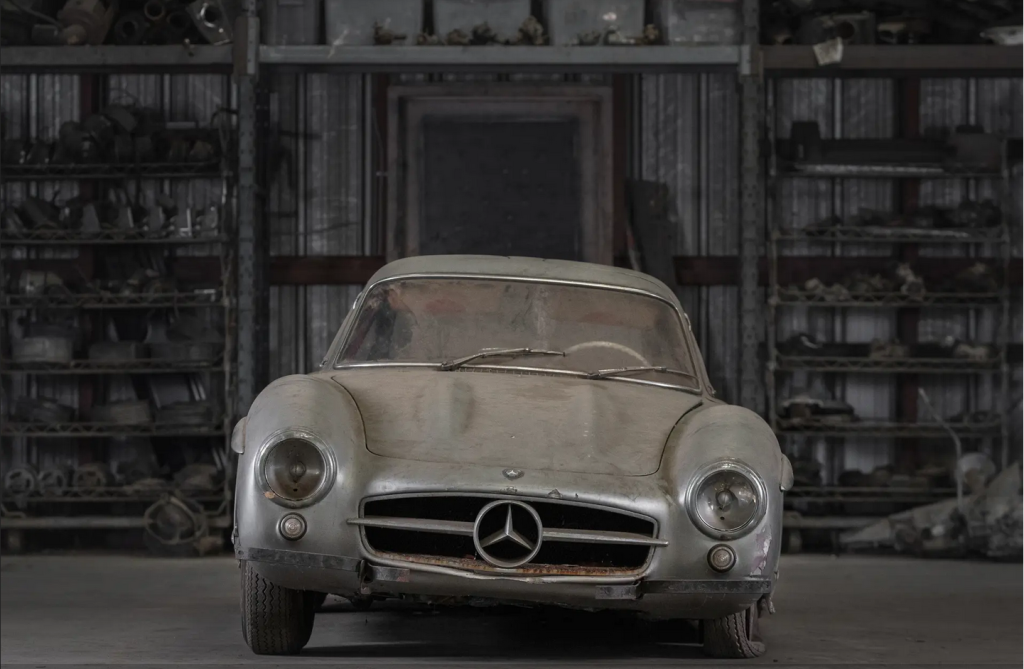
It involved a coke dealer whose car I saw on the Kurfürstendamm in Berlin one day, and I’d got it into my mind that he screwed me over a deal. My very good friends Iggy Pop and Coco Schwab had clubbed together and bought me a really cheap but lovely Mercedes, 1954 I think it was. You know the ones with rabbit skin around the steering wheel? So delightful. It didn’t have a floor! It was all very rusted. We were all very broke in those days. It was a bit like a pedal car, if your feet went through. It was quite dicey.

So I was driving that and I saw this guy, let’s call him Johan, in the car. And I was so crazed I started ramming him in the Kurfürstendamm, in daylight, in, like, 12 o’clock in the day. And I rammed him and I rammed him, and I was ramming him, He looked around and I could see he was mortally terrified for his life. I’m not surprised. I rammed him for a good, it must have been a good five to ten minutes, which is a very long time actually. Nobody stopped me. Nobody did anything. And I got out of it, ‘What am I doing?’

That night everything came to a kind of a spiritual empasse, you know? And I really was down in a hotel garage, and I started going round and round, just like a movie I’d seen. I thought, ‘Oh, this is so Kirk Douglas in that film [Two Weeks In Another Town, 1962] where he lets go of the steering wheel.’ [laughs] You can tell what kind of condition I was in. Or what condition my condition was in. So I started going round and round, faster and faster. And then I let go. And as I let go I ran out of petrol. I just slowly came to a stop! I thought, ‘Oh God, this is the story of my life.’ As it happens, things picked up after that!

David Bowie on BBC Radio Theatre, 27 June 2000 (Source: The Bowie Bible, Always Crashing in the Same Car))

Photo: 1956 Mercedes-Benz 300 SL ‘Alloy’ Gullwing (Source: RMSothebys Auctions)

Questa l’ho scritta a Berlino, tra la metà e la fine degli Anni Settanta. Parlava di uno dei miei pochi, molto stupidamente e malamente tentati, grazie a Dio, tentativi di suicidio. L’intera storia è piuttosto allarmante. Non so se raccontarla o no.

C’era di mezzo un trafficante di coca, del quale un giorno vidi l’auto lungo il Kurfürstendamm di Berlino, e mi ero messo in mente che mi avesse fregato riguardo un accordo. I miei cari amici Iggy Pop e Coco Schwab erano stati in giro per club, e mi avevano comprato una super economica, bellissima Mercedes, credo fosse del 1954. Avete presente quelle con la pelle di coniglio intorno al volante? Deliziosa. Non aveva pavimento! Tutta arrugginita. Eravamo tutti molto al verde all’epoca. Era un po’ come un’auto a pedali, se i piedi ci fossero passati attraverso. Era piuttosto pericolosa.

Insomma la stavo guidando, e ho visto questo tizio, chiamiamolo Johan, in macchina. Ero così fuori di me che ho iniziato a speronarlo nel Kurfürstendamm, alla luce del sole, tipo verso mezzogiorno. E l’ho speronato e l’ho speronato, lo stavo speronando, e lui si è guardato intorno e ho visto che era terrorizzato a morte e temeva per la sua vita. Non ne sono sorpreso. Ho continuato a speronarlo per un bel po’, devono essere stati cinque o dieci minuti, che è davvero un tempo lungo, veramente. Nessuno mi ha fermato. Nessuno ha fatto nulla. E me ne sono uscito, ‘Cosa sto facendo?’

Quella notte tutto arrivò a una sorta di stallo spirituale, sapete? Ed ero davvero giù nel garage di un albergo, e ho iniziato a girare in tondo, proprio come in un film che avevo visto. Ho pensato: ‘Oh, fa tanto Kirk Douglas in quel film [Due settimane in un’altra città, 1962] dove lui lascia andare il volante.’ [ride] Potete capire in che razza di condizioni fossi. O in che condizioni fosse la mia condizione. Così ho iniziato a girare in tondo, sempre più velocemente. E poi ho lasciato andare. E mentre lasciavo andare, sono rimasto senza benzina. Semplicemente mi sono fermato piano piano! Ho pensato: ‘Oh Dio, questa è la storia della mia vita.’ A dire il vero, le cose poi sono migliorate!
Signora Polvere di Stelle

La gente fissava il trucco sul suo viso
Rideva dei suoi lunghi capelli neri, della sua grazia ferina
Il ragazzo nei suoi jeans abbaglianti
Saltò sul palco
La signora Polvere di Stelle cantò canzoni
Di oscurità e vergogna

E stava benissimo, il gruppo suonava all’unisono
Sì, stava benissimo, la canzone non finiva più
Ed era tremendamente bello
Davvero straordinario
E cantò per tutta la notte

Femme fatale emergevano dall’ombra
Per osservare questa creatura da favola
Ragazzi salivano in piedi sulle sedie
Per avere una visuale migliore
Io sorrisi tristemente per un amore che non potevo seguire
La signora Polvere di Stelle cantò canzoni
D’oscurità e sgomento

E stava benissimo, il gruppo suonava all’unisono
Sì, stava benissimo, la canzone non finiva più
Ed era tremendamente bello
Quasi come il paradiso
E cantò per tutta la notte

Oh, come sospirai
Quando mi chiesero se conoscevo il suo nome

E stava benissimo, il gruppo suonava all’unisono
Sì, stava benissimo, la canzone non finiva più
Ed era tremendamente bello
Quasi come il paradiso
E cantò per tutta la notte

Dai, ora avvicinati

Lady Stardust

(David Bowie)

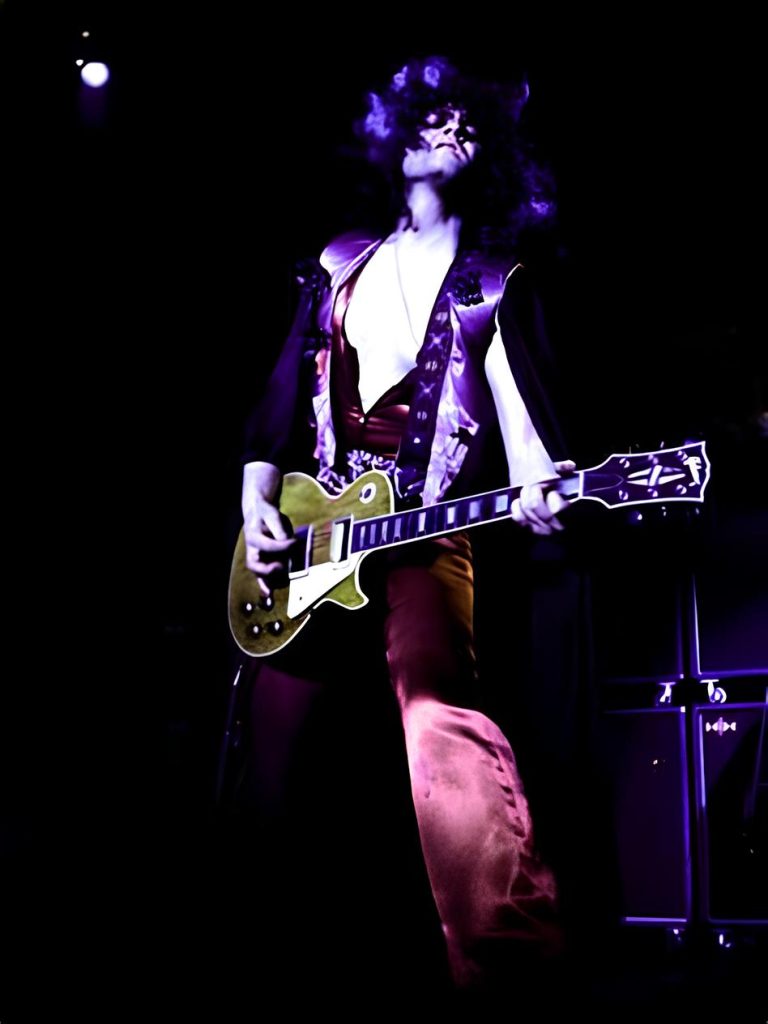
People stared at the makeup on his face
Laughed at his long black hair, his animal grace
The boy in the bright blue jeans
Jumped up on the stage
Lady stardust sang songs
Of darkness and disgrace

And he was alright, the band was altogether
Yes he was alright, the song went on forever
And he was awful nice
Really quite out of sight
And he sang all night long

Femme fatales emerged from shadows
To watch this creature fair
Boys stood upon their chairs
To make their point of view
I smiled sadly for a love I could not obey
Lady Stardust sang his songs
Of darkness and dismay

And he was alright, the band was altogether
Yes he was alright, the song went on forever
And he was awful nice
Really quite paradise
And he sang all night long

Oh, how I sighed
When they asked if I knew his name

And he was alright, the band was altogether
Yes he was alright, the song went on forever
And he was awful nice
Really quite paradise
And he sang all night long

Look, come closely now

DAVID BOWIE: I went to buy some shoes – and I came back with Life On Mars

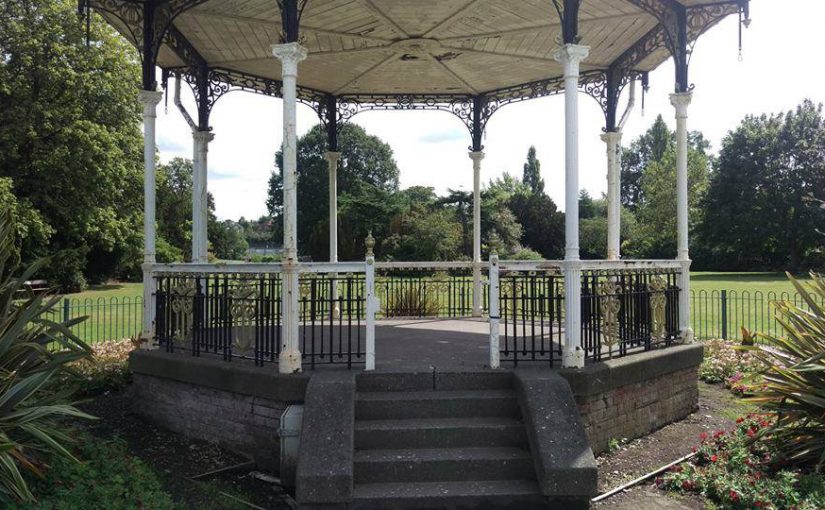
This song was so easy. Being young was easy. A really beautiful day in the park, sitting on the steps of the bandstand. ‘Sailors bap-bap-bap-bap-baaa-bap.’ An anomic (not a ‘gnomic’) heroine. Middle-class ecstasy.
I took a walk to Beckenham High Street to catch a bus to Lewisham to buy shoes and shirts but couldn’t get the riff out of my head. Jumped off two stops into the ride and more or less loped back to the house up on Southend Road.
Workspace was a big empty room with a chaise longue; a bargain-price art nouveau screen (‘William Morris,’ so I told anyone who asked); a huge overflowing freestanding ashtray and a grand piano. Little else.
I started working it out on the piano and had the whole lyric and melody finished by late afternoon. Nice.
Rick Wakeman came over a couple of weeks later and embellished the piano part and guitarist Mick Ronson created one of his first and best string parts for this song which now has become something of a fixture in my live shows.
By David Bowie for Daily Mail (MailOnline UPDATED: 21:53, 28 June 2008)
Bowie Bandstand photo by Wendy Woo

Questa canzone è venuta facilmente. Essere giovani era facile. Una giornata veramente bella al parco, seduto sui gradini del palco. ‘Sailors bap-bap-bap-bap-baaa-bap.’ Un’eroina anòmica (non ‘gnomica’). L’estasi della media borghesia.
Feci una passeggiata in Beckenham High Street a prendere un autobus per Lewisham per comprare delle scarpe e delle camicie ma non riuscivo a togliermi quel ritornello dalla testa. Saltai giù dopo due fermate e più o meno galoppai fino a casa su in Southend Road.
Lo spazio in cui lavoravo era una grande stanza vuota con una chaise longue, un paravento a buon mercato (‘William Morris,’ così dicevo a chiunque me lo chiedesse), un enorme posacenere autoportante stracolmo di mozziconi e un pianoforte a coda. Poco altro.
Cominciai a lavorarci su al piano e completai l’intero testo e la melodia per il tardo pomeriggio. Bello.
Rick Wakeman capitò dalle mie parti un paio di settimane dopo e riprese la parte per pianoforte arricchendola e Mick Ronson creò una delle sue prime e migliori parti per chitarra per questa canzone che ora è diventata qualcosa come un punto fermo nei miei spettacoli dal vivo.